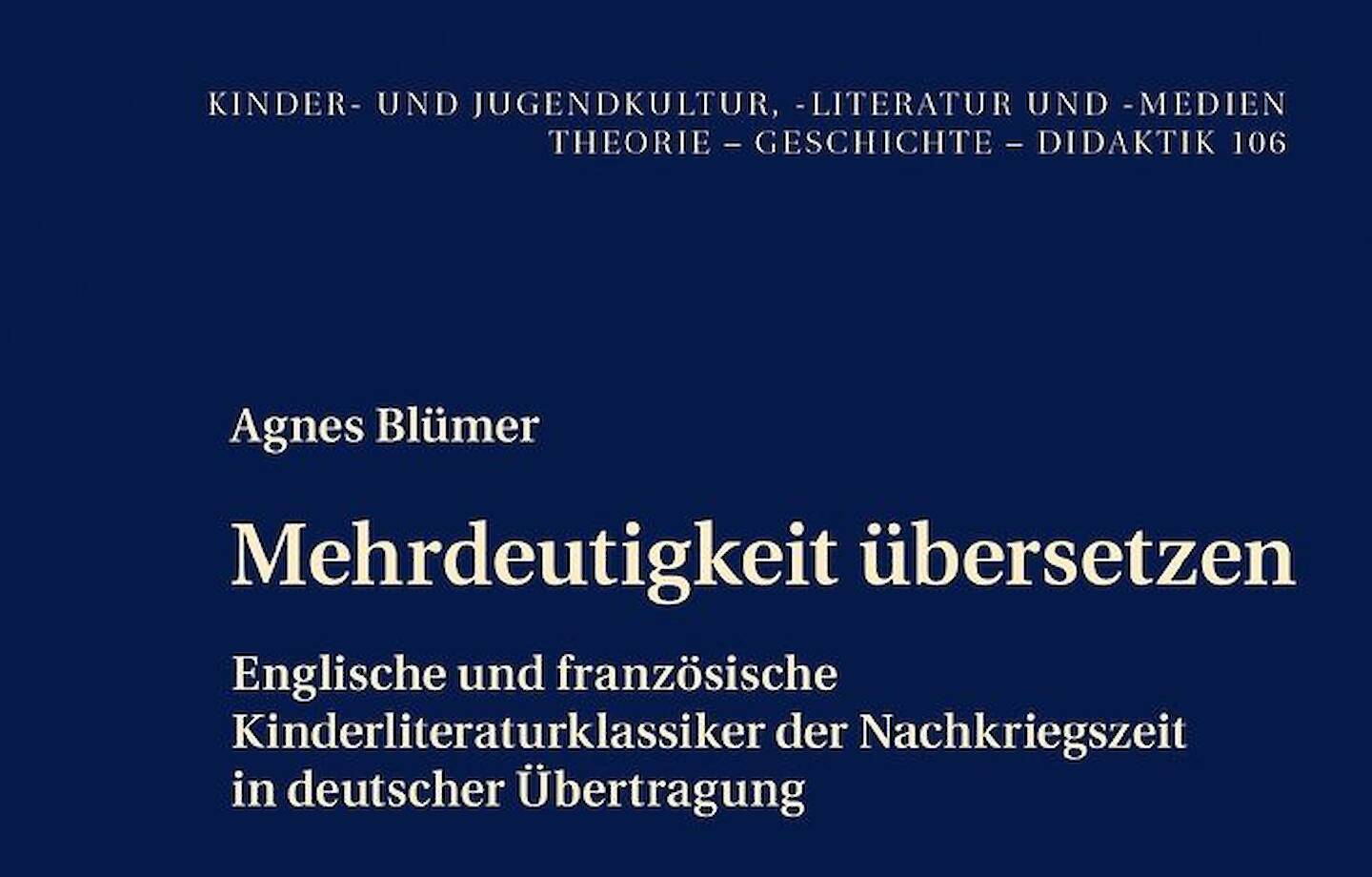
Neologism -- *Urmehrdeutig*
German neologism of the day:
Urmehrdeutig
After Georg Joseph Vogler's *Mehrdeutigkeit*, we might translate "Urmehrdeutig" as "primal pun".
The primal pun is
--the music that had not yet been punned;
--the music that might be un-tempered, if the instruments allow it;
--a value that, when embraced, promotes integration and syncretism, like Beethoven and Scott Johnson.
Perhaps the measure of our vaunted innovations is obscured if we do not, within the work, integrate the *Urmehrdeutig*?
Zweiduetig 'n
Mehrdeutig 'n
Little lambs eat ivy;
A kid'll eat ivy too, wouldn't you?
The proud modernist bridge-burners never dared to enfold the Urmehrdeutig. They were of a bridge-burning moment. And I love their stuff. But I cannot defend it from those who say it's obscure. Enfolding the Urmehrdeutig is an enormous technical challenge.
Movement toward the Urmehrdeutig will perhaps most often be a move into B-roll material. Our innovative moments, passages where we dare to be a bit antisocial, are our A-roll moments. But in some contexts, we can imagine the Urmehrdeutig moments very striking and A-roll.
Ultimately, I could see this leading to a new Mobius strip binary form. That will be shown in music, hopefully, not words.
There are many compositional movements in place, entire schools of composition that relegate Mehrdeutigkeit to the shadows. Schools ensconced in academia where the profs' profs didn't have Mehrdeutigkeit on their radar.
Values get shuffled, obscured, sent to the shadow, eclipsed. We can celebrate this Antimehrdeutigkeit moment.
Those who working the Mehrdeutigkeit patch can do so with little competition, *placidly amidst the noise and haste*.
The redolences at play here:
There's the joke with the punchline, "it leads to dancing".
Mehrdeutigkeit leads to temperament, which reeks now. It's the "musty old blankets" that was hurled at Brahms.
"Daß die Musik die Zweideutigkeit als System sei."
The phrase "music is systematized equivocation" (or "ambiguity as a system") is a famous concept from Thomas Mann's 1947 novel Doctor Faustus. It describes how music uses slippery, deceptive meanings, allowing any single note or chord to be interpreted in multiple ways depending on its context."System" now reeks. I'd say instead that a new classical music would entail the thoughtful creation of formal gardens that traverse between the mehr/zweiduetig and the urmehrdeutig.
I am exaggerating here, and nevertheless, spectral music and music in just intonation are *constitutionally* at odds with Mehrdeutigkeit, as the pitches are unique and the interevals are unique, unpunnable, untransposable. These movements strike us as *constitutionally* antimehrdeutig.
//////////////////////////
The antiquity of Mehrdeutigkeit and Zweideutigkeit is seen in the well known phrase, "mi contra fa."
I pass it onto the web, for what it's worth:
Using the "mi contra fa" formulation to argue for early transpositional thinking and Mehrdeutigkei is a brilliant angle, and the historical timeline perfectly supports your thesis. [1]
In the medieval and Renaissance Guidonian system, the standard gamut (musica recta) consisted of only three hexachord types: Natural (on C), Hard (on G), and Soft (on F). Because these three hexachords only generate one semitone variance ($B\natural$ vs. $B\flat$), any complex chromaticism required step-shifting or transposing the entire 6-note hexachord structure to a new pitch center altogether. This process was called musica ficta. [2, 3, 4]
To trace transpositional thinking through the lens of "mi contra fa," you can structure your timeline around three distinct historical thresholds:
1. The Prototypical Transposition (c. 11th–13th Centuries)
- The Concept: Long before the phrase "mi contra fa" was formally penned, the concept of a shifting/transpositional hexachord was born out of sheer necessity (causa necessitatis) to avoid the tritone. [5, 6]
- The Argument: To resolve the vertical clash between $B\natural$ and $F$, musicians realized that $F$ (originally fa in the Natural hexachord) could be re-conceptualized. By transposing the 6-note "Hard" interval structure down a whole step, a new, unwritten hexachord emerged. [3, 4]
- The Date: This practical, floating transpositional framework traces back to the early 1200s with theorists like John of Garland (De musica mensurabili), who began defining musica falsa (ficta) as the transposition of the Guidonian hand's structural intervals to positions where they did not naturally belong.
2. The Smoking Gun: Johannes Tinctoris (1476)
- The Concept: This is the exact moment the localized phrase "mi contra fa" is codified into counterpoint law to handle musica ficta. [3, 7]
- The Argument: When Tinctoris writes down the prohibition of mi contra fa in his 1476 Liber de arte contrapuncti, he is explicitly addressing an abstracted, mobile system. To sing mi or fa on "accidental" or sharped/flatted notes, the singer had to mentally project a completely transposed hexachord (hexachorda ficta) onto the music. [3, 4, 7]
- The Dating Pitch: Tinctoris provides you with hard evidence that by 1476, musicians were not thinking of pitches as absolute, static frequencies. Instead, they possessed a highly sophisticated, relational, and transpositional mindset where "mi" and "fa" were mobile functions that could be mapped anywhere onto the gamut to achieve smooth counterpoint. [4, 8]
3. Radical Systemization: Bartolomé Ramos de Pareja (1482)
- The Concept: Just six years after Tinctoris, Ramos de Pareja published Musica practica.
- The Argument: Ramos took this exact transpositional reality to its logical extreme. He openly attacked the rigid, traditional Guidonian hexachords. He argued that because singers were already constantly transposing "mi" and "fa" via musica ficta to fix vertical clashes, the old 6-note system should be abandoned for an entirely customizable, octave-based transposition system. [9, 10]
Summary for Your Argument
If your goal is to prove transpositional thinking goes back centuries before modern tonal key signatures, 1476 (Tinctoris)is your anchor point. The phrase "mi contra fa" is structural proof that singers were simultaneously superimposing two differently transposed interval frameworks over one another to navigate polyphony. [2, 3]
[1] https://casfaculty.case.edu
[5] https://www.areditions.com
[6] https://www.researchgate.net
[10] https://www.areditions.com

William Anderson
I compose, play plucked instruments, run ensembles, produce concerts, and advocate for new music, I soaked up contemporary American music for 30 years, working directly with composers from all over the map. In the last 20 years I began composing works that draw on that experience, with a particular concern for finding a coherent way to make reconciling musics that were sealed off from one another. How to make embarrassingly simple and charming music work with the most complex musical modalities? Tipping in this direction has made me aware of the dangers of grasping too firmly onto any one notion.
I've come to Macherey's vision that our shadow (what we're *not*) is radiantly present in our work. So it's perfectly reasonable to *love everything*. We're imbricated. --
**The true necessity of the text manifests itself in the fact that not a word of it can be changed and nothing can be added, even though it appears at each moment as though a new topic could be chosen, an alternative narrative selected. But it is precisely this ceaseless shadowy presence of other possible phrases which could be pronounced, this ineradicable sense that things could have been other than they are, which enforces the constraining necessity of the text we actually have before us.**--Macherey