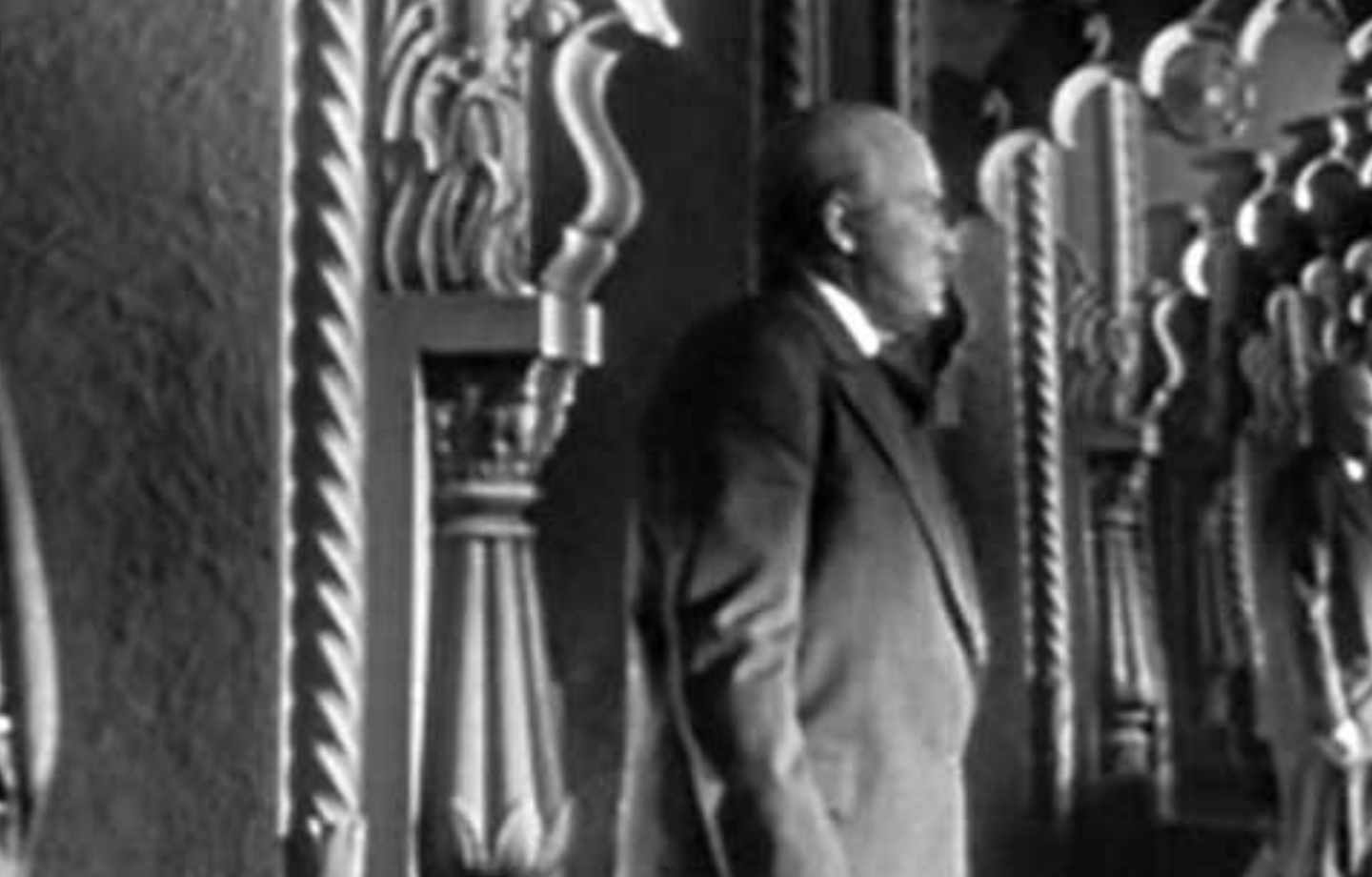
Bildung for Billionaires
- We once liked millionaires/billionaires.
- Any billionaire can follow Warren Buffet and become a hero.
- Billionaires don't make great art, but their fortune and its story can be as interesting as a work of art. Maybe each billionaire story is a work of art.
- When we were younger, they didn't cause any noticeable harm. We got a kick out of them when they were eccentric.
Supplication
Please spare us. You bought out the government that was supposed to protect us from you.
What can we do? How can we move you to be reasonable -- reasonably civic minded ? Can we move you to rejigger things so that our votes matter again? Call to composers: make songs that whisper to billionaires.
Bildung for Billionaires
Bildung is a lifelong process of self-cultivation, personal formation, and cultural maturation that harmonizes an individual's mind, heart, and character with society.
-- Nordic Bildung
As my country is being systematically destroyed, I remember fondly what I learned from VS Pritchett, not long ago, reading his essays. The pursuit of happiness began with a focus on shopkeeper goods. We were a nation of shopkeepers. We found meaning in our work. Melville's *Israel Potter* dramatizes it beautifully. We see Israel, on his picaresque journey, donning the garb of a scarecrow; working as a gardener and, by chance, meeting the king (confronting the universal order that was no more); later working in a brickyard and becoming a brick.
A self image --
man = their work
"I am a corporate takeover!"
"I am a leveraged buyout!"
"I am a parleyer of my father's wealth into a vast fortune!"
Perhaps these had our admiration for a time --
"I am Windows 95."
"I am Facebook."
"I am paypal"
But these are dangerous to us and the cat's out of the bag --
"I am Cambridge Analytica."
"I am Palentir."
We still don't know how bad those things will be for us. We'll know more in November.
The billionaire has the power to transform. We were relatively safe when Bill Gates was taking on worthy projects through his foundation. Did we lose him?
Artists, in their heyday, flattered the powerful. Making art is wonderful in itself, but serving power became a sideline. The artists needed to make themselves useful to the powerful.
Now artists are a monolithic block against the oligarchs, but answerable to smaller powers -- selection committees, curators, critics, any and all gatekeepers.
I was happy to discover Zaidie Smith making efforts to show a wariness of groupthink --
The opening of Zadie Smith's collection of essays entitled, *Dead and Alive* --
Sometime around 2013, in the middle of a stage interview, a literary critic had an interesting question for me. Why had I begun to write more about the visual arts? And less about books? Answering his own query, he began to muse about the visual term in the culture, the emergence of the black body as a site of inquiry, the rejection of the white male gaze… And kept talking. I nodded and smiled, doing my best to follow, though I hadn’t slept properly in a while, and he was using a lot of jargon.
If selection committees contribute to the promotion of jargon, group think and store-bought tropes, don't they also circumscribe the conversation in a way that renders the problems of billionaires very remote? There may be nothing to do about this. Art and Bildung should be for everyone, including billionaires.
The powerful must not be left to find meaning by themselves in a culture that demonizes them.
We should revert to the old ways and court the billionaires.
All this is preamble. My primary aim was to bring attention to what Jorge Luis Borges had to say about Citizen Kane, touching on the strange space occupied by millionaires/billionaires.
Citizen Kane and Mr. Arkadin (also known as Confidential Report) are two Orson Welles films about people with money and power with no idea about what their money and power mean. Whither my power?
Borges says it best in his controversial review of Citizen Kane (CLICK)
Borges:
"...a vain millionaire collects statues, gardens, palaces, swimming pools, diamonds, cars, libraries, man and women. Like an earlier collector (whose observations are usually ascribed to the Holy Ghost), he discovers that this cornucopia of miscellany is a vanity of vanities: all is vanity. At the point of death, he yearns for one single thing in the universe, the humble sled he played with as a child!"
The "earlier collector" is the Qoheleth?
Qoheleth (or Qohelet) is a Hebrew title meaning "the Preacher," "the Teacher," "the Assembler," or "the Collector". It is the name used by the protagonist of the biblical book of Ecclesiastes, often associated with King Solomon, who explores the meaning of life, wisdom, and pleasure, frequently declaring them "vanity" or a "chasing after wind".
Borges spells it all out. A millionaire/billionaire is a labyrinth with no center. Borges finally compares it to a party.
Borges:
We all know that a party, a palace, a great undertaking, a lunch for writers and journalists, an atmosphere of cordial and spontaneous camaraderie, are essentially horrendous. Citizen Kane is the first film to show such things with an awareness of this truth.
Speaking of writers' lunches:
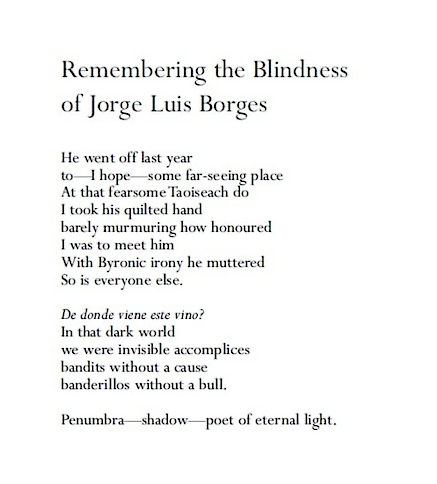
Composer John McLachlan's mother, the wonderful poet Leland Bardwell, reports that when she met Borges Ireland at something close enough to a writers' lunch and he brushed her off rudely. One with the inside scoop on lunch labyrinths should know better? I remain a loyal fa of Borges, McLachlan and his mother.
Leland Bardwell made a poem about it, a Tenzone, but more polite:
I'm thinking of Robert Musil's *The Man Without Qualities*. In that amazing work, the great undertaking is a golden jubilee anniversary celebration of Emperor Franz Joseph; the jubilee is the labyrinth with no center. Moreover, an incest scene builds up with inexorable power, and what is it all about? A bizarre image of misdiredted energy or corruption of our vital forces? The punchline: the novel dies of mission creep before the jubilee ever happens.
In one of Knut Hamsun's novels he mentions, in so many words, what I've come to call "the Nietzsche thing". I wish I could find the passage. Take your situation with all of its problems and hold it at an arm's length. The predicament, objectified, becomes a work of art. Such is where Bildung happens?
Let's leave where all the vanities meet, in Psalm 39, (Wuorinen's setting), "For I am a stranger with thee and a sojourner, as all my fathers were."
Behold, thou hast made my days as an handbreadth;
And mine age is as nothing before thee:
Verily every man at his best state is altogether vanity.
https://www.youtube.com/watch?v=cqziNLmbk74&list=RDcqziNLmbk74&start_radio=1

William Anderson
I compose, play plucked instruments, run ensembles, produce concerts, and advocate for new music, I soaked up contemporary American music for 30 years, working directly with composers from all over the map. In the last 20 years I began composing works that draw on that experience, with a particular concern for finding a coherent way to make reconciling musics that were sealed off from one another. How to make embarrassingly simple and charming music work with the most complex musical modalities? Tipping in this direction has made me aware of the dangers of grasping too firmly onto any one notion.
I've come to Macherey's vision that our shadow (what we're *not*) is radiantly present in our work. So it's perfectly reasonable to *love everything*. We're imbricated. --
**The true necessity of the text manifests itself in the fact that not a word of it can be changed and nothing can be added, even though it appears at each moment as though a new topic could be chosen, an alternative narrative selected. But it is precisely this ceaseless shadowy presence of other possible phrases which could be pronounced, this ineradicable sense that things could have been other than they are, which enforces the constraining necessity of the text we actually have before us.**--Macherey